


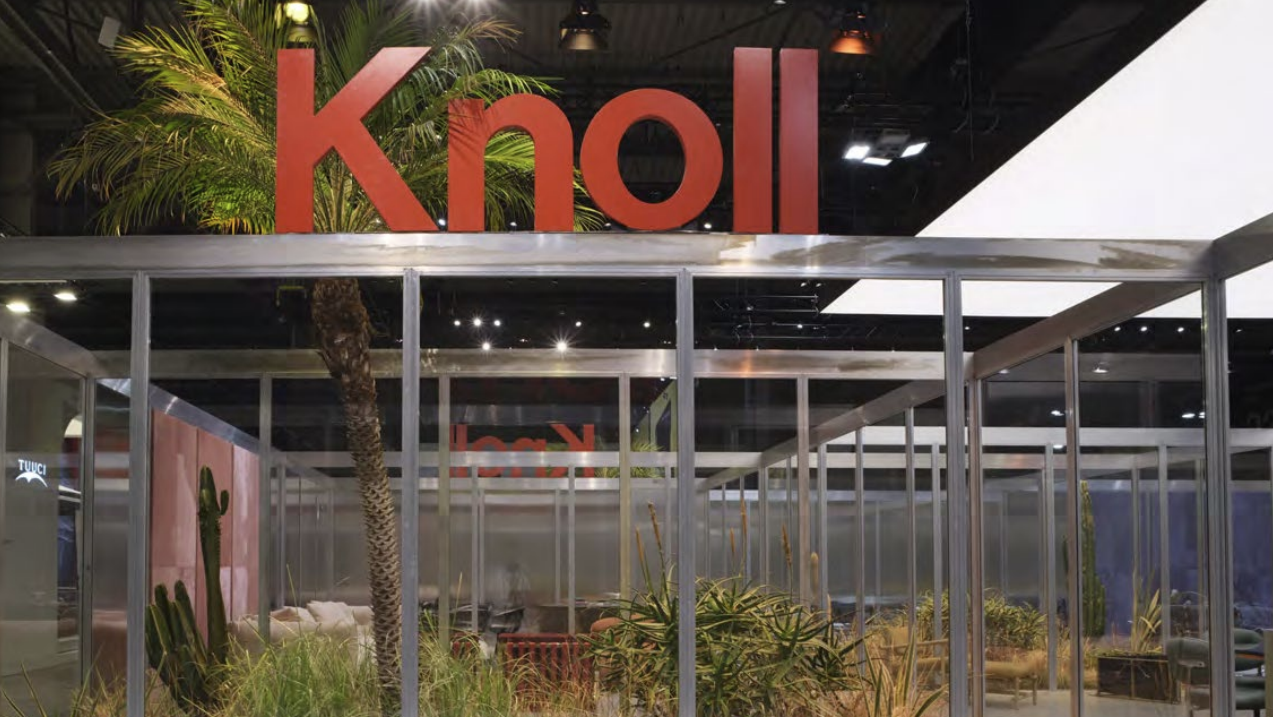
After 130,000 steps and countless exhibits later, our team has returned from the 2026 Salone del Mobile in Milan with plenty to reflect on. The annual exhibition prides itself on being a hub of experimentation and cross-pollination, a meeting point and a place for new opportunities to reflect on the world of design and planning.
Held in the Rho Fiera Milano, as is traditional, our team visited and took the opportunity to speak to other leading designers, including a chance meeting with American designer, author, and product designer, Mick De Giulio, who’s known for his impact on kitchen interiors and for his books KitchenCentric and KITCHEN.
With more than 1,900 exhibitors from 32 countries, more than 227 new brands, over 700 designers, and 169,000 square meters of sold-out exhibition space, the 64th edition of the Salone del Mobile provided plenty to think about. However, reflecting on our visit, here are the key highlights that we are excited to see permeate kitchen design and interiors over the next few years.
Curvaceous appeal from SieMatic to THE CUT Kitchens
If there was one unifying visual theme across the Salone del Mobile, it was the dominance of curves. From islands to cabinetry, every major kitchen brand embraced softer, more organic forms this year.
SieMatic delivered a particularly immersive experience, blending architecture, sound, and materiality in a pavilion created in collaboration with German tech brand, Loewe. Floating structures, glass cabinetry, and richly layered materials reinforced the idea of kitchens as experiential spaces rather than purely functional ones. Their introduction of patterned glass, with designs baked directly into the material, further emphasised craftsmanship and individuality.
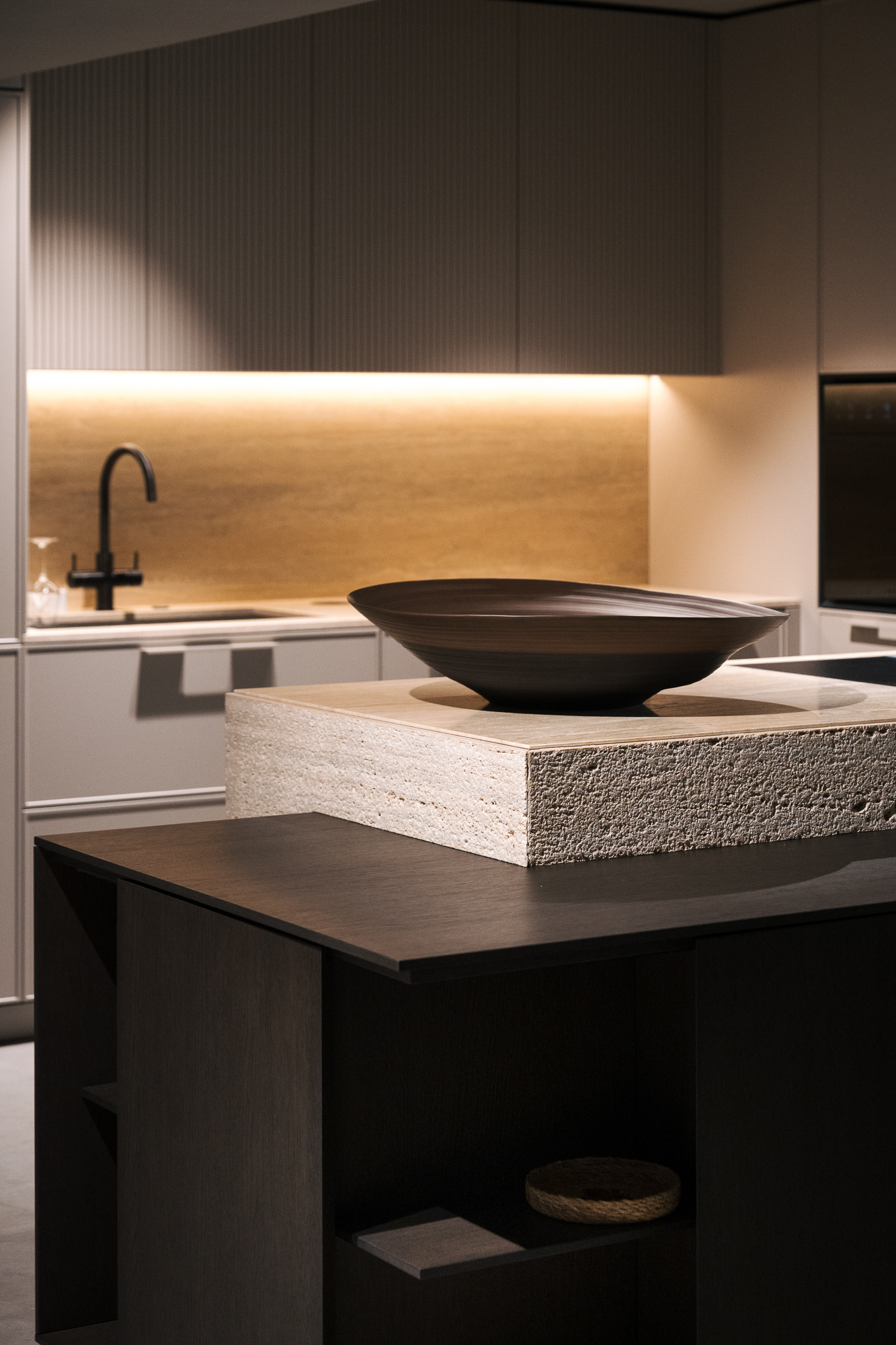
Meanwhile, THE CUT Kitchens presented one of the most striking installations, centred around a monumental stone breakfast bar that juxtaposed honed and textured finishes. Curves here weren’t just aesthetic either; they concealed storage, softened movement through space, and introduced a more tactile, human quality to the kitchen.
Across the board, curved islands, rounded panels, and integrated niches for herbs or utensils demonstrated how this softer geometry can be both beautiful and practical.
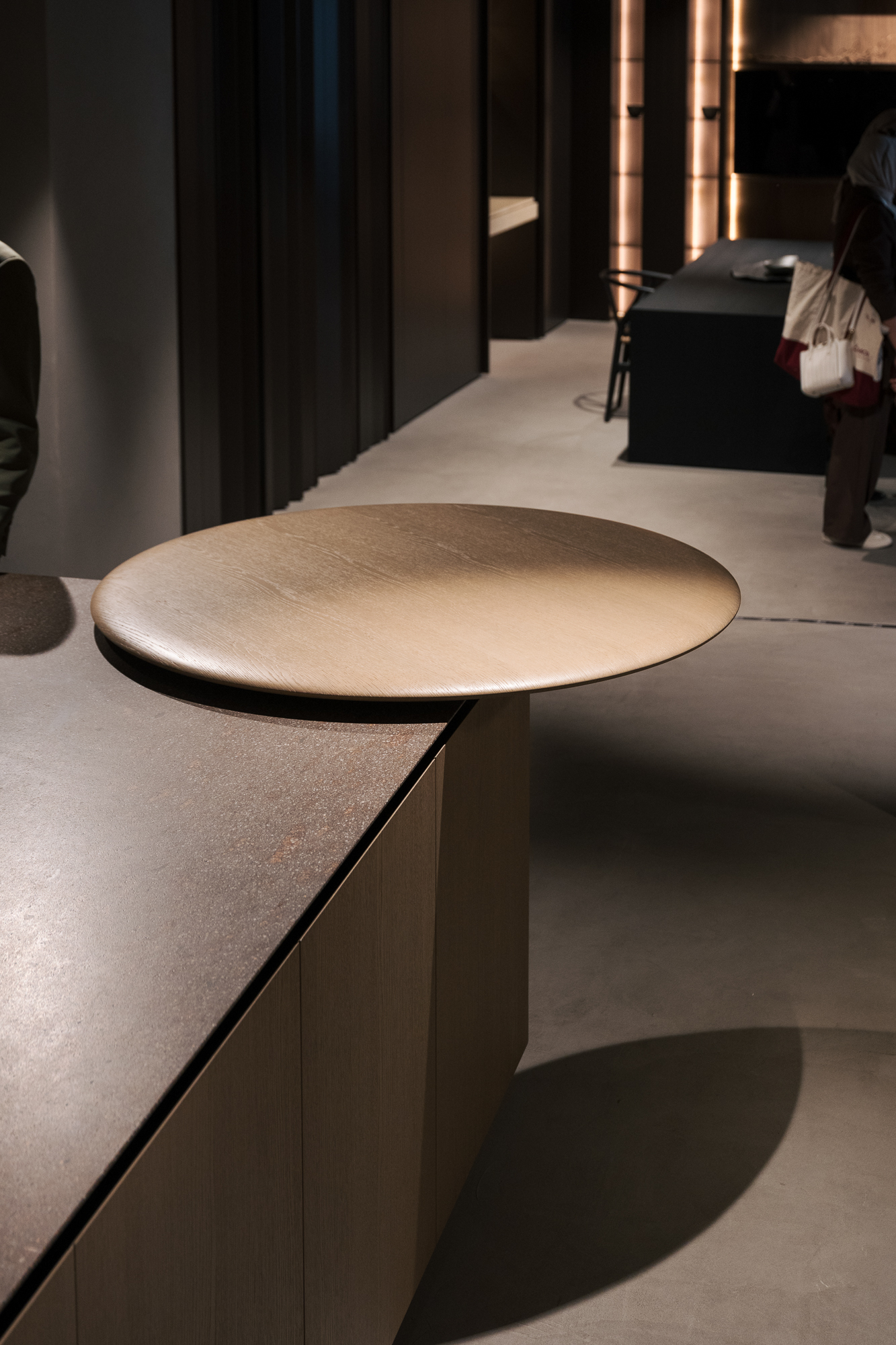
A luxurious take on daily wellness rituals at GESSI
Amongst the most memorable experiences of the exhibition was the installation by Gessi, the Italian brand famous for creating accessories for bathrooms, kitchens, and wellness. Their innovations elevated the concept of wellness into a fully immersive, sensory environment with water features, including cascading waterfalls, setting the tone for a space that felt closer to a luxury spa than a product showcase.
Gessi’s latest collections position everyday rituals as opportunities for wellbeing and longevity. Steam-integrated shower systems, tactile materials such as leather-wrapped taps, and even bamboo detailing inspired by Japanese craftsmanship all contributed to this narrative.
The brand also introduced a highly curated material gallery, enabling designers and clients to collaborate on bespoke palettes and finishes. Every detail, down to branded table settings in their pop-up dining space, reinforced a sense of cohesion and luxury. It was a reminder that kitchens and bathrooms are no longer purely functional, but central to how we experience daily life, health, and relaxation.
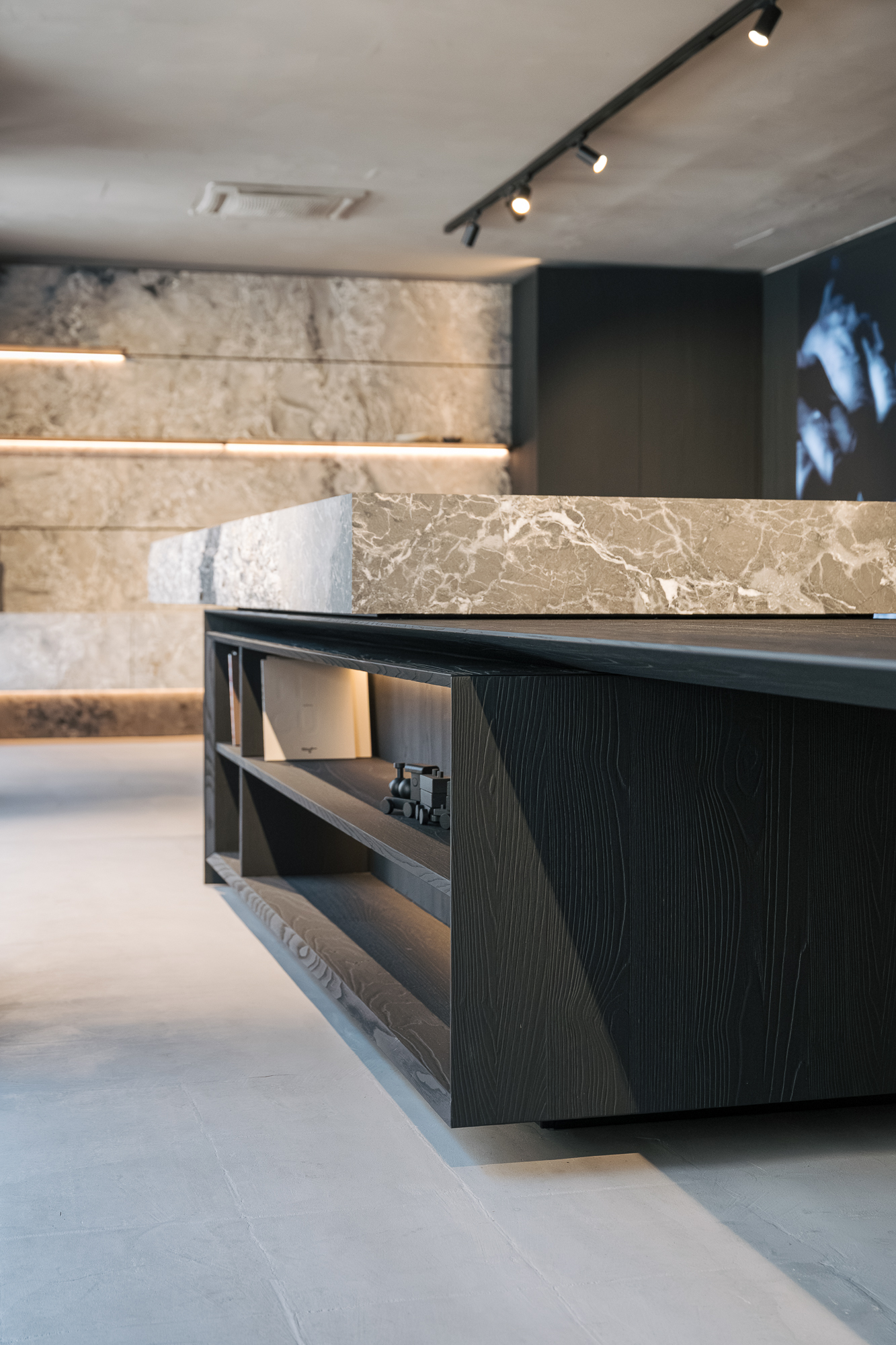
Creating space with luxury designer furniture solutions at Caccaro
One of the most compelling demonstrations of spatial innovation came from Caccaro, of whom we’ve long been fans. Here, large-format panels of stone, wood or glass were transformed into dynamic architectural elements. These weren’t static surfaces; instead, they slid, rotated, and opened to reveal hidden storage or entirely new functional zones. The effect was one of fluid space-making kitchens and living areas that can expand, contract, and adapt depending on the moment.
One of the reasons this is so game-changing for homeowners and designers, is the absence of traditional structural constraints. The system-based approach allows for partitions that can open on both sides, forming bars, dressing areas, or even home gyms, all without permanent walls or invasive building work.
It heralds a move towards spaces that are part of a broader, more flexible approach to interior landscapes that can be reconfigured as lifestyles evolve, rather than fixed environments defined solely by cabinetry.
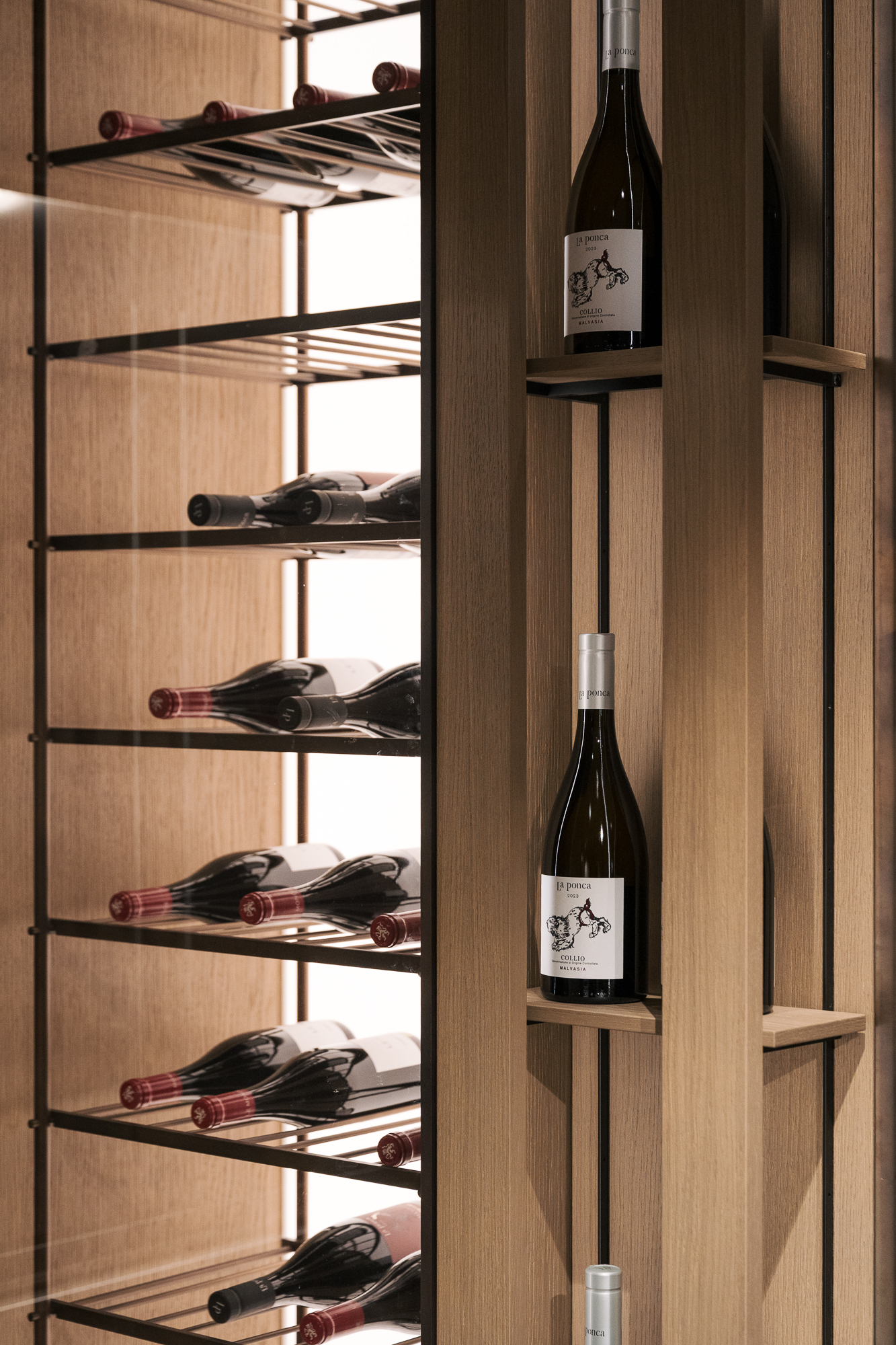
Hidden practicalities provided by tech
Innovation so often lies in what you don’t see as well as what you do, and integrated technology is increasingly playing a powerful role in that.
One ongoing trend is the seamless incorporation of robovacs directly into kitchen cabinetry. It’s concealed, automated, and entirely in keeping with the clean architectural lines of modern kitchens. We have reported on this before, when Bosch (BSH Home Appliances Group) presented their ground-breaking, built-in vacuum and mopping robot in partnership with ECOVACS at the KuchenMeile trade fair in Germany.
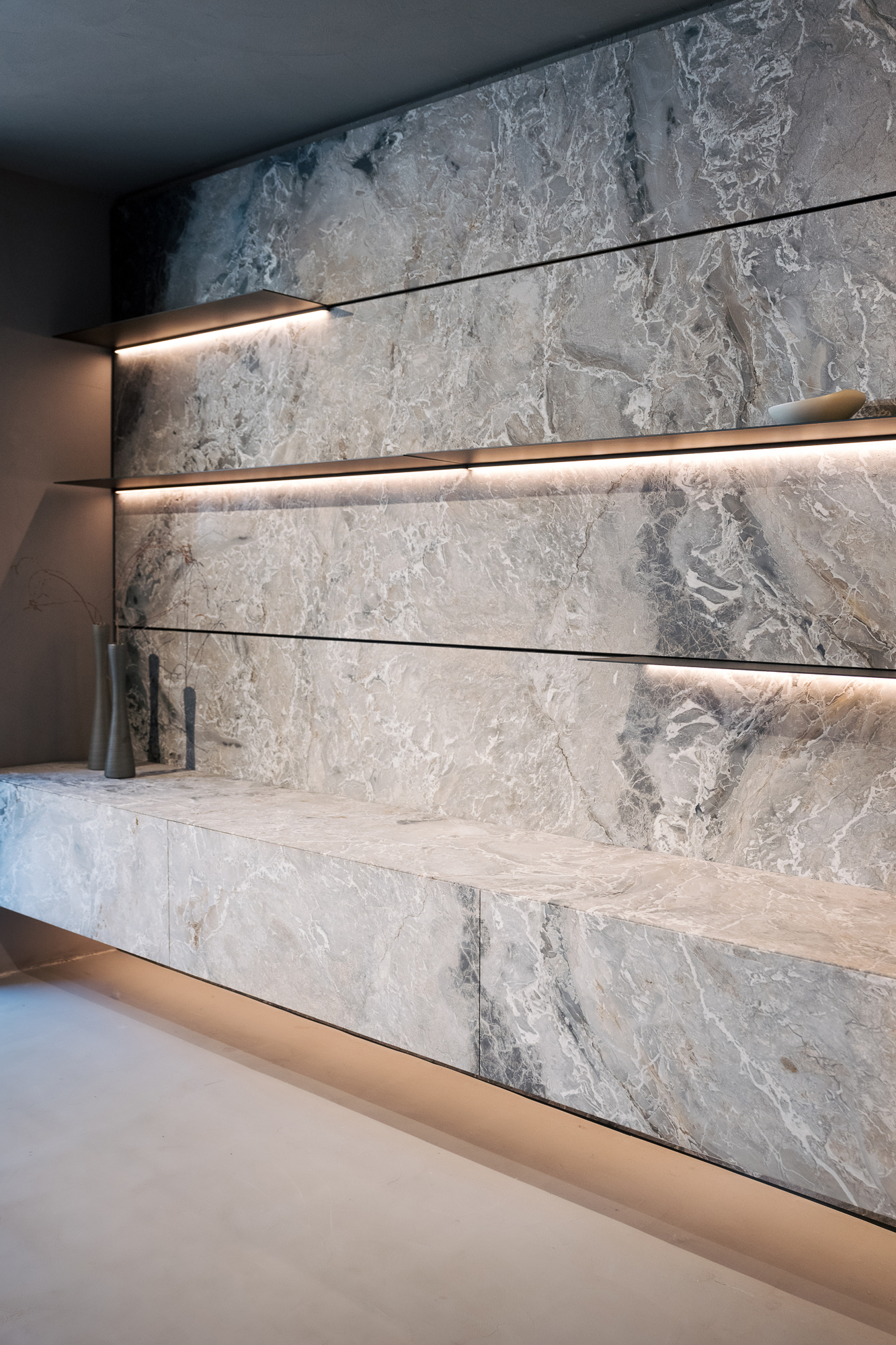
Alongside this came advances in surface technology, notably from Marmo Arredo with their Arke Vitium range of materials for countertops. Their manmade stone slabs use sublimation printing to achieve extraordinarily high-resolution finishes that convincingly replicate natural stone. The advantage is not just aesthetic, but practical as well. Designers can achieve continuous veining across large surfaces, including sinks, without the fragility or limitations of natural materials.
The result is a new category of surface – one that looks carved and monolithic but offers durability, flexibility, and freedom in design. While not yet widely available in the UK, it’s clearly on the horizon and represents a valuable addition to the material palette for kitchen designers seeking both beauty and performance.
Industry-wide investment in outdoor spaces
Outdoor living has firmly moved from a trend to a lifestyle expectation in luxury homes. Across the exhibition, and particularly in displays hosted in Milan’s historic courtyards, there was a clear emphasis on fully realised outdoor environments, complete with lounge areas, integrated kitchens, and architectural solutions.
Manufacturers are increasingly treating outdoor kitchens as a direct extension of the home. Aluminium systems, built-in drinks fridges, and cooking appliances are now designed to mirror indoor comfort and functionality, while remaining robust enough for year-round use.
Materiality also reflected this shift. Stainless steel, once purely utilitarian, is now combined with warmer, bronze-toned finishes, allowing it to sit comfortably alongside softer, layered palettes. The result is a more cocooning, residential feel outdoors, that’s less about utility and more about atmosphere and continuity with interior spaces.
Architectural appeal from lighting to radiators
Beyond kitchens themselves, the 2026 Salone del Mobile highlighted a broader architectural approach to interiors, where every element from lighting to heating and surfaces contributes to a cohesive spatial language.
Lighting brand Occhio introduced the Era series, including portable, rechargeable luminaires designed for both indoor and outdoor use. Sculptural in form, with subtle detailing like fluting or curves, these pieces reinforce the move towards flexibility and continuity between spaces.
Even traditionally utilitarian elements like radiators have been reimagined, with historic designs giving way to sculptural pieces that read more like art installations than heating solutions. The emphasis is on aesthetic enhancement rather than concealment, not to mention enjoyment in the details of our homes
Spaces defined by feeling as well as function
Materially, the palette across these elements leaned toward earthy tones, such as ochre, terracotta, and warm neutrals, but punctuated by fresh mint accents. This seemed to work alongside a general shift towards biomorphic forms, signalling a move away from minimalism towards richer, more expressive interiors but still retaining a sense of tranquillity.
Taken together, these developments point to a future where kitchens, and the spaces around them, are defined not just by function, but by feeling as well. The approach seems to recognise (and perhaps give permission to) the pleasure of indulging in the joy we can get from the details we see each day in our homes and the rituals of everyday life.
Create a home you can delight in with Nicholas Anthony, get in touch with us today.